Annavaram Sri Satyanarayana Swami prasadam

1 cup Godhumarava (Broken wheat sooji), rava
1 1/2 cups Sugar
¼ tsp Elachi Powder
1/2 cup Ghee
3/4 cup milk
Cashew nuts, Almonds and Raisins

Depending on the size of the rava, grind in a mixer jar to a rough course.

Take 2 tsp of ghee in a non stick pan and when it is hot, add almonds and cashew nuts and fry them, then add raisins. Remove the nuts and raisins, leaving ghee in the pan. Add godhuma rava and fry till it turns golden yellow stirring frequently without burning. Empty the rava into a plate or onto a paper.

Take 1: 2 ratio of water to the rava. Pour water into the pan and bring to boil, then simmer the stove and add rava in small quantity, stirring continuously. Be careful not drop the whole thing at once or lumps of rava will form and it will not be cooked evenly. Now add milk and mix well.

Once bubbles appear on the pan top, add sugar, gently stirring in. Add ¼ cup ghee, elachi powder and mix thoroughly. Keep stirring frequently till ghee bubbles appear on the top of the pan. This is a sign that rava has been cooked well. Garnish with nuts and raisins. The secret to this recipe is lots of fresh ghee and cooking on low flame till nicely done.

This prasadam can also be prepared with Bombay rava or sooji, this is how it is prepared in Annavaram, the abode of Rama sahita Sri Satyanarayana Swami.  The prasadam offered to the devotees at the temple has a wonderful taste that cannot be replicated.

Pelalu vadiyalu


My friends from other parts of Andhra also never heard of this item, so let me explain a little about them. These are sun dried items, mainly used as a side dish with rice and dal. They belong to the category of papads and varthans (vadilayu). I guess it is a regional delicacy; even my husband had not tried it before marriage and now is a big fan himself!

My aunt back home in India is a specialist in making pelalu vadiyalu. She would send us every year when we were small. But, with age she stopped doing personally, but passed on her recipe to the mahila society, a small scale industry run by the women of the village. That was one returning gift we brought from home with us always. Every time I would fry them, I would ration at the dinner table, saving for a special craving time. These are the pelalu vadiyam that I am talking about, but, not anymore.

I spoke to my aunt, she assured me that's it's all about mixing to a right consistency and binding the ingredients together. So, a prized family recipe I am sharing with you all today.

This is my maiden in trying out the pelalu vadiyalu. I am very happy with what I was able to make. It all started when recently I was strolling by the aisles in Apna Bazar in Edison, I found a big bag of pelalu, by the puffed rice and rice flakes (poha-atukulu).

Pelalu (Juwar Dhani) are already-popped sorghum. They are exactly like popcorn - flavor-wise, only with teeny tiny kernels.

1 bag Pelalu
1 tsp Red chili powder
1 tsp Vammu
½ cup Sesame seeds – Til

Add salt, vammu, red chili powder and roasted sesame seeds on pelalu and mix well, sprinkle water (in small amounts) till you are able to make a solid round ball. Squeeze hard so that it binds well. Place the ball on the knob of a pickle or jam jar and level it using your fingers, pressing hard and leveling at the same time. Then turn it around and gently tap the knob so that it falls freely on the cover.

Sundry the vadiyams on a polythene cover for 2 – 3 days or till they are dry and light. Store in an air tight container to be used throughout the year.

Heat oil in a kadai and fry the vadiyams on medium/low flame till nicely done. Drain and place on a paper towel to absorb the oil. Serve with lunch or dinner as a side dish for pappu or sambar. My son loves it with his curd rice!

Nimakaye karam (Lime karam)

This is an instant side dish, quick and easy to prepare.

6 Limes/ Lemons
2 tsp Urad dal – Minnapappu
2 tsp Chenna dal – Senagapappu
1 tsp Jeera
1 tsp Mustard seeds
4- 5 Red Chilies
Hing
Few curry leaves
1 tsp Red chili powder

Squeeze lime/lemon juice, add salt and turmeric powder and keep aside. Avoid using instant lemon juice.

Take 6 tsp of oil in a small skillet and when oil is hot add urad and channa dal. Then add jeera, mustard seeds, hing, red chilies, and curry leaves. Fry till nicely done, remove from flame, add red chili powder for extra spice and let cool.

Let cool. Transfer the tadka into a blender jar, leaving oil in the skillet. Dry grind tadka to a smooth powder.

Mix the ground tadka, lemon juice and the oil in the skillet and mix well.

Serve as a side dish with rice or upma. The taste leaves a tingling taste craving you for more.

Pessara pachadi

Pessara pachadi is an age old pachadi that has been coming down from generations. This is a rescue item, for those days when we run out of vegetables in the fridge. Sliced onions with lemon juice and salt and hot tomato charu/rasam by the side, is, all it requires.
                                    
1 cup Moong dal – Pessara pappu
10 – 12 Red chilies
1 tsp Jeera
Small lemon sized Tamarind
Lemon juice

Soak moong dal in luke warm water for 2 - 3 hours. Drain and keep ready.

In a mixer jar add 1 tsp raw jeera, raw red chilies (about 10 – 12) and dry grind them first. Then add the soaked moong dal, salt and grind to a smooth paste (add very less water).

Transfer into a serving bowl and mix with 2 tsp of lemon juice. This pachadi needs no seasoning; it is good to be eaten. Simple plain tomato rasam will be a great accompaniment with this pachadi.

Enjoy the pachadi with hot rice, a tsp of ghee or oil with warm rasam and onions sprinkled with lemon juice and raw green chilies dipped in salt.
There is a bonus with this pachadi. With left over pachadi a crunchy chakki or attu can be made.

Add a chopped onions, green chilies and coriander, red chili powder, salt and ½ tsp jeera and 2 tsp rice flour. Mix well with the pachadi.

Heat a dosa griddle and add a tps of oil and spread the mix well and cook on medium flame till it is roasted well. This chakki has a wonderful and unique taste. Serve with warm rice and enjoy!

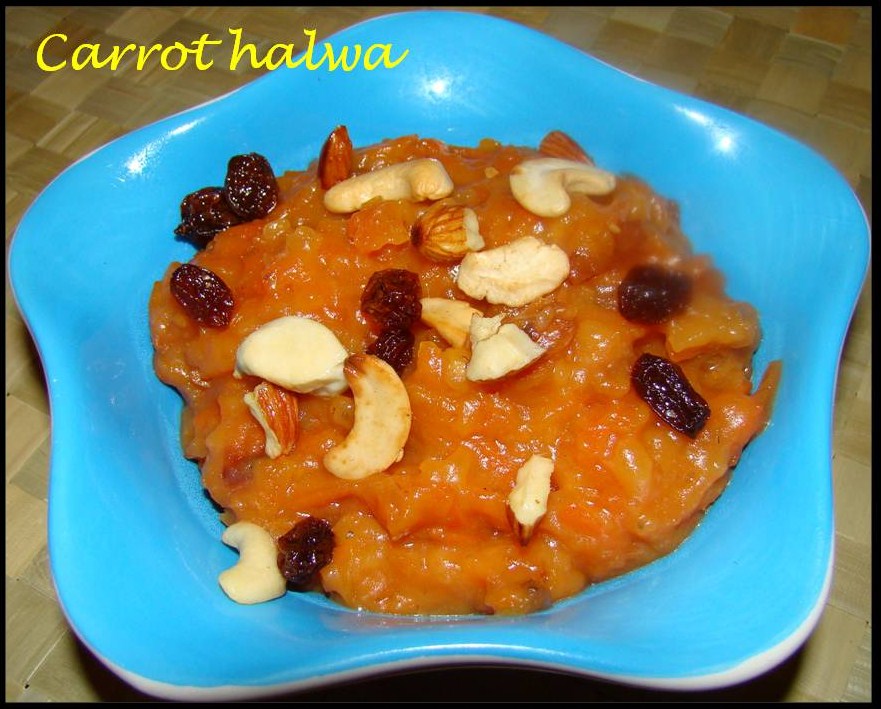
Carrot hawla

Gajar ka halwa or carrot halwa is a  very nutritious and tasty Indian sweet dish. It is a very simple process; nothing can actually go wrong here. By using evaporated or half-half, cooking time will be drastically reduced.

1 lb Carrots
1 can Evaporated Milk or 1 cup Half-half
1½ cups Sugar
4 tsp Ghee
½ tsp Elachi powder
2 tsp Raisins
2 tsp Almonds
2 tsp Pistachios
2 tsp Cashew nuts
Few strands of saffron
1 tsp Rice flour

Wash and peel carrots. Finely grate them, keep aside.

In a large non stick pan take 3 tsp of ghee, when warm add all nuts and then raisins, fry them till golden yellow. Remove the nuts and raisins from the ghee to a bowl. Keep aside. To the remaining ghee add another tsp of ghee and add the grated carrots, fry till the raw color changes. Then add a can of evaporated milk or cup of half-half and cook for a few minutes.
Now add sugar, elachi powder and 1” butter or ghee. Cook on medium heat and keep stirring regularly. When it all comes close together add a tsp of rice flour. Rice flour acts as a binding agent and brings all the ingredients together. Add all the friend nuts and mix well or arrange on the top. And garnish with saffron.

Grease the serving bowl and transfer the contents into it.

Carrot halwa can be served warm or cold, it’s a personal choice. Enjoy it with fresh whipped cream or vanilla ice cream for variation. I have see people enjoying hot jelabi with carrot hawla and if you are like someone I know, warm halwa with roti for dinner!

White vatana sundal

2 cups White vatana (Whole yellow peas, the peas look quite similar to garbanzo beans ( chick peas), except that they are smaller in size and white in colour.
2 Onions
3 Tomatoes
2 - 3 Green chilies
1 tsp Ginger-garlic paste
½ tsp Amchur/Dry mango powder
½ tsp Cumin-coriander Powder
½ tsp Garam masala
¼ tsp Red chili powder
Coriander

Soak white vatna over night. Cook in a pressure cooker with salt with a pinch of turmeric till they are soft. Do not overcook; just about right otherwise they become very mushy. Drain and keep aside.

Take 3 tsp of oil in a non-stick pan and make tadka with mustard seeds and jeera. When it starts to sizzle, add very finely chopped onions and chilies. Keep stirring at medium heat till the onions are translucent. Add ginger- garlic paste and fry for a few minutes. Then add cut tomatoes, cook for a few minutes and then add amchur powder, cumin- coriander powder, garam masala, red chili powder and salt.

Mix in cooked vatna, taste for salt and adjust the seasonings. Add some lemon juice and garnish with coriander, serve hot.

This is a very filling dish, a pot dish that can be eaten as is or can be served with roti. The same base can be made like a gravy dish by adding water and can be served over potato patties. This is the famous ragda patties on Mumbai streets!

Cashewnut chikki

Srirama Navami Subhakanshalu (03/24/2010)

Chikki is a traditional Indian sweet prepared with any edible nuts or with mixed nuts and sugar/jaggery. The preparation is quite simple. These are finger deserts that are hassle free and easy to eat!

Cashew nuts, like all nuts, are an excellent source of protein and fiber. They are rich in mono-unsaturated fat which may help protect the heart. Cashew nuts are also a good source of potassium, B vitamins and folate. They contain useful amounts of magnesium, phosphorous, selenium and copper. (source: Wiki)

I have to mention here the chikki made in Lonavala, Pune. They are simply mouth watering and will leave us craving for more! One piece is never quite satisfying. I love their pistachio, mixed nuts chikki.

Traditional chikki are made with peanuts but, I am a cashew person, so..

1 cup - Roasted cashewnuts (sliced or whole)
1 ¼ cup - Jaggery
2 tsp Ghee

Roast the nuts on low flame in ghee and in the case of peanuts remove the skin.

Take grated jaggery in a kadai and add ¼ cup water and on medium flame bring to a boil till it thickens. Perform the ball test, drop some syrup drops in cold water and try to roll it to form a ball if it is like a string, it needs to be cooked a bit more.

Filter the jaggery syrup to remove any impurities. (Avoid if you trust the jaggery). I buy mine at the same store always!

Once the syrup is ready, add a tsp of ghee to the syrup switch off the flame and immediately add the roasted cashew nuts. Stir and mix well.

Grease a parchment paper and pour the hot mixture on it. Roll it with a rolling pin and let the temperature of the mixture come down. Lumps of mixture can be rolled into a ball in the palm of your hand or cut into any desired shape.

Store in an air tight box, they have a good shelf life.

White turmeric (Mamidiallam) in lemon juice

A member of ginger family, white turmeric is a rhizome. Its flesh is a lighter than common turmeric; its flavor, however, is not as subtle, and some roots can be quite pungent.

Turmeric is known to be used medicinally for ulcers, parasitic infections, various skin disorders, strains, bruises, inflammation of the joints, cold and flu symptoms, preserving food and as a digestion aid.

This special turmeric is very rare and seasonal. But, I am able to see it regularly in the Indian groceries here. This is a simple dish, where all the properties of the ginger are intact and tastes great at the same time.

¼ lb Mango ginger/ white turmeric - Mamidiallam
5 – 6 Long Green Chilies
Lemon Juice
1 tsp Vammu

Wash and peel ginger as much as you can, it is really difficult to peel it all, leave the rest of it and cut into small pieces. Chop green chilies into small pieces, use enough to suit your taste. I use Cayenne or milder green chilies for relishing the raw taste of the chilies.

In a glass bowl squeeze lemon juice and add chopped green chilies, vammu (raw), salt and turmeric. Add chopped ginger pieces. Mix well and let sit for 1 -2 hrs before serving, by doing this, vegetables will absorb the lemon juice and the seasonings.

This can be used as side dish with rotis and as an accompaniment with dals, curries and rice. Store in an air tight glass bowl, in the refrigerator for up to a week. The citric in the lemon juice will not let it go bad.

Ugadi Subhakanshalu

Vikruti Nama Samvatsara Subhakankshalu.
March 16th 2010

In Sanskrit, Prakruti means "Nature" or "creativity"and Vikruti is "the adnormal state" or "the diseased state" of the body in Ayurveda. So, lets eat well, be healthy and lead a happy life to ward off an evil.

Wishing all my dear friends, family and readers a very happy Ugadi.

Madras sambar powder

I used to get my sambar powder from Grand sweets, but a friend has given me her grandmother’s treasured sambar podi recipe years ago and, with her permission I am publishing it here today. If you are buying a local brand or MTR, I suggest you give this a try and you will be surprised by it's taste.

¾ cup Urad dal- Minnapappu
½ cup Chenna dal – Senagapappu
½ cup Toor dal – Kandipappu
1 cup Coriander seeds- Dhania
Handful Red Chilies
1 ½ tsp Jeera
1 ½ tsp Mustard seeds
2 tsp Fenugreek seeds
2 tsp Black Pepper seeds
Hing
2 Handfuls curry leaves
4 tsp Grated coconut

Take 2 tsp oil in a skillet fry coriander seeds till they are done. Then add channa dal, toor dal and fry for a few minutes finally add urad dal, fenugreek seeds, jeera, mustard seeds, black pepper, hing, curry leaves and red chilies. At the end add grated coconut and fry till it is nicely done.

This order should be followed as coriander seeds take longer time to fry than the other dals. Red chilies can be adjusted according to taste.

It is really important that the mixture is stirred frequently and have the flame in low/ medium. This way the dals are roasted completely and prevents from darkening. The mixture emits a toasty aroma when they are nicely roasted.

Let cool. Grind to a powder in a spice mill or blender.

Use immediately or store in an airtight container in a cool, dry place or in a Ziploc bag in the freezer to retain its freshness and aroma.

Sambar powder is used for making sambar and other “pulusu” – Liquid dishes. All the items in the mixture will have a unique blend and when mixed with tamarind juice, vegetables and made sambar, the flavor will come out.

The key to good sambar is no doubt the podi but the toor dal should also be cooked very softly and mashed well leaving no visible dal. Weather you pressure cook or cook vegetables on stove top, do not overcook the onions and vegetables and use required amount of tamarind. Using hing, curry leaves and garlic (optional) in the seasoning will make it even more special.

Chili Idle

Sometimes you have left over idle's not enough for the whole family or want to fix a quick heavy snack or starter, here is a good idea. Fried idle and chili idle have become regular starters in Indian Restaurants. I hope they are not using left over's like I said! It could be a spicy dish but reduce the heat (karam) if you want it milder.

Idle - steamed and cooled. (Please refer to idle recipe in Brunch/Breakfast)
Peppers: any variety
Green/Yellow/Red Peppers
2 Large Onions
1 tsp Ginger-garlic paste
2 tsp Red chili paste
Coriander
Lemon Juice

Small button idle will be ideal, if not cut the regular idle into 4 pieces.

Take a large non stick vessel and add oil and make tadka with jeera and mustard seeds. Sauté' chopped onions and add ginger garlic paste. The add cut peppers and fry till semi cooked. Do not overcook. Now add salt and red chili paste and mix well.

Add idle and give it a good stir. Be gentle. Remove from flame and garnish with coriander and lemon juice. Serve warm.

Mysore pak

Mysore pak is a traditional South Indian sweet. There are different variations to it. Authentic Andhra mysore pak is hard and grainy, it has a double color to it. Mysore pak in Chennai is soft and dripping with ghee (cannot beat Sri Krishna’s mysore pak). This particular mysore pak is very easy. Check for the sugar syrup consistency and work on low flame for better results. A finger desert that easy to store and eat. Has a good shelf life, so prepare ahead during festivals or parties.
1 cup Bengal Gram - Senagapindi
2 cups Sugar
1 cup Ghee (Pure ghee can be used or oil can also be added.)
½ cup Oil
½ cup Water

Take 1 tsp of ghee in a non stick pan and add the flour. Fry on low flame till nicely done and color changes along with aroma of fried flour. Remove from flame let cool and sieve the flour to remove any lumps. This will make the flour aerated.

Melt ghee in a vessel and leave it on low flame till it is used.

Take sugar in a non-stick pan and add water and bring to a boil. Keep stirring and check the consistency. In few minutes drop a bit of the sugar syrup in the bowl of cold. The syrup should instantly settle at the bottom and when moved with a finger should form a round lump inside the water. The consistency of the sugar solution is very important in mysore pak preparation.

Reduce the heat and then, slowly add the flour stirring continuously so that no lumps are formed. Mix well till the flour blends well in the syrup. Now, add hot ghee with a ladle, one scoop at a time stirring evenly and continuously. Ghee will be absorbed by the base, it becomes frothy and bubbles are formed. Keep stirring till ghee separates and immediately transfer on to a greased tray and pat it well to even out. Let settle down and cut into diamond or desired shape. Allow it to cool and separate the pieces.

Do not wait too long to cut, or it will be very difficult to cut into a perfect shape. Store in an air tight box. Warm a few seconds (8 to 10 seconds) before serving.

Happy Birthday to my Blog!

With some inspiration and help from my brother, I posted my first recipe this day last year. I am celebrating one year of blogging. I did not imagine I would last this long. It is an inspiration for me to try new dishes or experiment in my kitchen.

A lot of things happened this past year; I am hoping time will heal the wounds. Amidst all this, cooking kept me sane and distracted. I have realized taste has its roots deep in the heart.

I would like to take this opportunity to thank all my silent readers, family and friends who have been visiting my blog. I am glad if I have inspired any of you to try your hand at something new.

>
It is a cold and blustery snow day out here. We will all stay warm and safe at home.

Malai Kofta

Malai Kofta is a vegetarian delicacy that goes very well with naan and any flavored rice. It is a vegetarian version of meatballs. For this; balls made out of grated vegetables (koftas) are fried/baked and dipped in a creamy rich sauce/gravy. It is an all time favorite in any Indian restaurant. It looks like a long procedure but, it is definitely a very easy one. Next time, order a restaurant special for dinner outside and savor homemade Malai kofta at home. A perfect party pleaser!
Vegetable Koftas:
4 Potatoes – Boiled and peeled
2 Carrots - Grated
1 cup French cut beans
3 Green Chilies – Cut finely
2” Ginger – Finely grated
Coriander
½ tsp Red chili powder
½ tsp Cumin coriander powder
5 bread slices
4 tsp of bread crumbs – optional

Boil all the vegetables with salt, drain and mix them well. Add chopped green chilies, ginger and coriander, red chili powder and cumin coriander powder. Place bread slices under running tap water for 10 seconds and gently squeeze the excess water. Grated paneer can also be added at this time.

Mash it in the potato base and mix properly. Make small lemon size balls and place them on the palm and role it between the hands. (shaped like bullets) and have them ready for frying.

Heat oil in a kadai (I personally prefer a traditional concave shape kadai for maximum usage of space with less oil) and never let the oil be screaming hot! It burns the first batch.

Pick each piece, role it in a plate of bread crumbs and gently drop in oil. Let then fry for a few seconds and keep turning back and forth so it will not burn. Once they all turn golden yellow, it’s time to remove from the oil. Place them on paper towels so the excess oil is absorbed. Or, grease a dosa griddle and roast them on medium flame turing frequently.
Gravy:
3 Large Onions
4 Tomatoes or 1 small can tomato paste
2 tsp Ginger – garlic paste
3 Green Chilies
½ tsp Shahi Jeera
5 Cloves
5 Elachi
2” Cinnamom stick
2 Red Chilies
½ cup Cashew nuts
4 Dates
1 cup Half-half / Fresh cream

Take a large non stick pan and add oil. When oil is hot add shahi jeera, red chilies, cloves, elachi, cinnamon stick and fry. Then add cashew nuts and fry till nicely done. Add chopped onions and fry till the color changes, then add ginger-garlic paste and then chopped tomatoes and dates. Cook till nicely done. Add chopped coriander and remove from flame, let cool and grind to a smooth paste in a blender. Add water as required.

Add oil to the same non stick pan and transfer the ground puree to it and bring to a boil. Add salt, and cumin-coriander powder. Bring to a boil, keep stirring frequently. Reduce the flame and add half-half slowly mixing, let cook till bubbles are formed. Add water if gravy thickens. Add grated butter if a greasy gravy is desired. Transfer into a large serving bowl.

Gently add the koftas to the gravy when it is still hot. The koftas will absorb the spices from the gravy. Garnish with roasted almonds and cream. Serve with flavored rice of choice or naans, paratas.

Methi Potato

Fenugreek greens (methi leaves) have a pleasant bitter edge and have a great medicinal value. They gel well with potatoes and dals and give the dish a certain "spicy" taste.
5 Potatoes
1 bunch Methi leaves
2 Onions
Chili-Ginger Paste

Separate methi leaves from the stems and chop well. Wash and drain. Boil and peel potatoes, cut into cubes.Grind green chilies and ginger into a smooth paste.

Take 3 tsp of oil in a skillet and make tadka with few jeera and mustard seeds. Then add cut onions and stir fry for a few minutes, then add chili-ginger paste and fry for a few minutes. Then add chopped methi leaves and add salt, turmeric and saute' for a few minutes. It's best if the greens are not fried to a crisp - just enough to wilt them, much like spinach. The fresh colour of the greens are retained. Add a tsp of cumin-coriander powder and 1/2 tsp of amchur powder.

Then add cooked potatoes and mix gently without disturbing the shape of the vegetables. Taste for salt and seasonings, can be adjusted to suite your taste. Garnish with chopped coriander.

This is a good side dish with rice or rotti.
I tried to make jonna rotti (jowar rotti), came out ok taste wise, but a long way to go before I can get the shape and expertize to work faster!

Super Bowl Sunday

If it was a few years ago, I would not have known about this Super Bowl Sunday. We would only watch the game to see the new and funny commercials on TV.

But, thanks to my son, we followed the whole season on TV, even though our team lost along the way, we continued watching the games. Previously, I would make it a movie night when all major networks had games on Prime time. I am excited the Sunday night football ends here for now!

It does not matter to me which team wins, but, I will root for the team my son is supporting. I am excited and waiting for all the snacks we will be having tonight.

We are having spicy corn, cheesy baguette (french bread), Tortilla chips and pita chips with various dips like guacamole, artichoke & spinach hummus and fiery salsa!

Cheesy baguette is a very popular snack at my house. Make slices of the baguette. Grate pepper jack cheese (or any favorite cheese) and sprinkle on the bread, add favorite toppings, mine are jalapenos. Tomatoes, onions and olives can also be used as toppings. Toast them till the cheese melts and serve warm with Marinara sauce.
Good Luck to the Colts and Saints. May the best team win! Have fun this evening.
updated after the game...Congratulations to the New Orleans Saints on their Victory.

Dondakaye(Tindora) karampeti kura

This stuffed dondakaye kura melts in the mouth. Only fresh and tender dondakaye should be used for a perfect dish. Most kids love dondakaye, I know mine do, so try this simple and appeasing dish to satisfy taste buds.
1 lb Tindora - Dondakaye
5 – 6 tsp Kura Podi – Menthe Podi (From my previous blog in Podis\Powders)
½ tsp Red Chili Powder
1 tsp Tamarind Pulp
1 tsp Jeera
2 tsp Besan - Senagapindi

Take kura podi in a bowl add red chili powder, jeera, tamarind pulp, 1 tsp of oil, salt and besan. Mix well. Taste for salt and seasonings, cannot be corrected later. This is called menthe.

Cut the edges and slit at the top, turn and make another slit on the opposite side. By slitting this way, the stuffing will stay inside of the vegetable well during cooking. Steam cook in a pressure cooker in a colander without adding water for 3 whistles to make the cooking process very fast (stuffing should be done after the steam cooking)
or cook on stove top after stuffing.

Use hand or a spoon and stuff the “menthe” on both sides of the cut dondakaye. (Suit your taste)

Take 4 tsp of oil in a skillet and add stuffed dondakaye. Cook on low/medium heat so all them are all cooked evenly. Do not use a stirring ladle to stir/mix it. Use a fork/spoon and move each piece individually. Cook with the skillet covered. It will take about 15mins for them to be nicely done.
Test one piece to see if it is done or if they are falling apart, it is time to remove from the flame.

This is a perfect side dish to go with hot rice.

National Girlfriends Day

To the cool women that have touched my life.. Here's to you!
Celebrating National Girlfriends Day
What would most of us do without our sisters, confidants and shopping, lunching, and traveling girls?
Let's celebrate each other for each other's sake!
To My Sister, Sister-in-law, Girl friends and Cousins...

Cranberry Chutney/Pickle

A bright red berry with a tart tangy flavor contains the highest levels of beneficial nutrients when consumed fresh.

Cranberries help prevent and treat urinary tract infections. This native American berry may also prevent the formation of kidney stones, lower LDL and raise HDL (good) cholesterol, aid in recovery from stroke, and even help prevent cancer.

When cranberries' short fresh season (from October through December) is past, rely on cranberry juice and dried or frozen cranberries to help make every day throughout the year a holiday from disease. (source: VHFoods.com)

This tangy, spicy, red chutney/pickle may be a good substitute for the traditional chintakaye or oosirikaye pachadi from India. Introduced by a friend, I could not figure the main ingredient (was new to America then!). Since these berries are seasonal, I make the base and store it in the fridge and make small quantities with fresh tadka.

1 bag fresh Cranberries
Small lemon sized Tamarind
1½ tsp Red Chili powder
1½ tsp Fenugreek seeds – Menthulu
1 cup Oil
1 tsp Mustard seeds
Few Red Chilies
½ tsp Asetifodia /Hing
Few Curry Leaves

Fry fenugreek seeds in a few drops of oil till nicely roasted. Let cool and make smooth powder.
Wash and air dry cranberries. Rough grind fresh berries with tamarind in a mixee jar.

Take 1 cup oil in a skillet and when hot, add mustard seeds, hing, curry leaves and split red chilies. Then add the ground berries and cook till the paste thickens. Then add salt, fenugreek powder, red chili powder, a pinch of turmeric and mix well. ½ a tsp of brown sugar or jaggery can also be added.
Remove from flame and let cool. Transfer into an air tight jar and store in the refrigerator.

This is a good side dish with rice, dosa’s and upma. It can also be used as a spread on bread or pita bread.

Coconut mango chutney

Half a Coconut
1 sour raw Mango
½ tsp Urad dal – minnapappu
½ tsp Chenna dal – senagapappu
½ tsp Jeera
½ tsp Mustard seeds
A pinch of Fenugreek seeds
2 -3 Red Chilies
Hing
3 -4 Green chilies
Few Curry Leaves

Cut coconut into small pieces, wash and drain. Peel and cut mango into small pieces.

Soak tamarind in hot water.

Take 2 tsp of oil in a small skillet and when oil is hot, add urad and chenna dal. Once the dals are fried add jeera, mustard seeds, fenugreek seeds, hing, red chilies, chopped green chilies and curry leaves. Let cool. Transfer the tadka into a blender jar, leaving oil and some tadka for garnish and curry leaves in the skillet.

Dry grind tadka first. This will make the grinding part easy, after adding coconut the dals will no longer become soft. Then add cut coconut pieces, salt, turmeric, cut mango pieces and very less water to grind to a smooth paste. If mango is not too sour, tamrind can be added. Taste for salt and adjust seasonings.

Empty it into the skillet with oil and mix nicely and transfer contents into a serving bowl.

“Kobbari mavidi pachadi” is a hard core Telugu pachadi/chutney. It can be served with hot rice and a tsp of oil or with upma, dosa or any tiffin items.